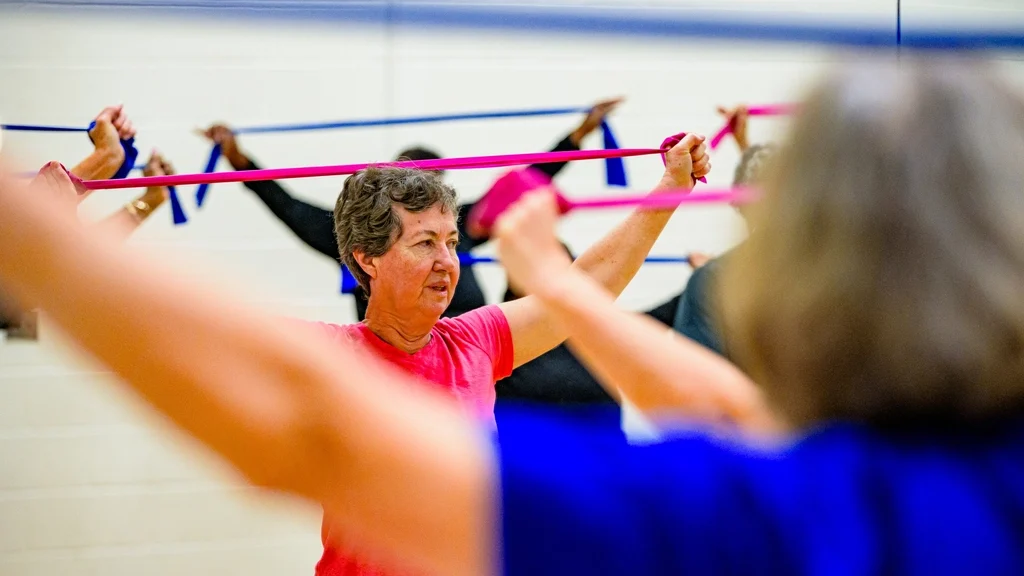
Resistance bands are cheap, portable and surprisingly effective for building strength. Here is how to choose them, use them safely and get started with a simple full-body routine.
Quick points
- Resistance bands provide continuous tension through each movement, making them a genuine alternative to weights for building strength.
- Australian guidelines recommend adults do muscle-strengthening activities on at least two days each week, and bands are an easy way to meet that.
- A set of light, medium and heavier bands lets you match the resistance to each exercise and progress as you get stronger.
- Do 2 to 3 sets of 10 to 15 repetitions per exercise, and leave at least a day between band sessions so muscles can rest and adapt.
- If you have a health condition or have been inactive for a while, check with your doctor or an exercise professional before starting.
Resistance bands are one of the least intimidating ways to start strength training. They cost little, take up almost no space, and can work nearly every muscle in your body without a single dumbbell. If you have been curious about building strength but unsure where to begin, this guide covers the types of bands available, how to pick a resistance level, and how to use them safely at home.
Why resistance bands are worth a try
Strength training is any form of exercise that involves weights or resistance, and bands are simply one way of creating that resistance. When you stretch a band, your muscles work to overcome the force it creates, and unlike a dumbbell, a band provides continuous resistance throughout the whole movement. It also feels heavier the more you stretch it, so the challenge builds as you move through each repetition.
There are practical benefits too. Bands are light and take up very little space, so they suit small homes, travel and quick sessions squeezed into a lunch break. You can do plenty with a single band, and exercises can be done standing or sitting, which makes them accessible if you are getting back into exercise or prefer to train from a chair.
The health case for resistance training in general is strong. It builds muscle strength and tone, which helps protect your joints from injury, and it can improve bone density and reduce the risk of osteoporosis. Band exercises can also improve your balance, which lowers the risk of falls, and they can make everyday activities like carrying something heavy or climbing stairs easier. Australian guidelines recommend adults do muscle-strengthening activities on at least two days each week, and bands are a simple way to meet that target.
The main types of bands and what each is for
Bands come in a few shapes, and knowing the difference helps you buy once rather than twice.
| Type | What it looks like | What it suits |
|---|---|---|
| Flat therapy band | A long, stretchy strip with no handles | Most beginner exercises, including seated work |
| Loop band | A closed circle, often wide and fabric | Squats and leg exercises placed above the knees |
| Tube band with handles | Elastic tubing with grips at each end | Rows, curls and presses where a handle feels secure |
Specialised shapes such as figure eight bands, ring bands and lateral resistance bands exist as well, but they are more limited in how you can use them. If you want one purchase that covers a wide range of exercises, a flat band or a set of loop bands is the most flexible starting point. Most bands are available from sports shops or online, and a basic set is inexpensive compared with most other strength equipment.
How to choose the right resistance level
Resistance level simply means how hard a band is to stretch. The test is straightforward: the band needs to be stretchy enough for you to complete the entire movement with good form, but with enough tension that you can feel it in your muscles. If you cannot finish the movement, or you have to cheat the technique to get there, the band is too strong for that exercise.
Because different muscles have very different strength levels, most people are better served by a set of bands in light, medium and heavier options rather than a single band. A banded squat might feel comfortable with a heavier band while a shoulder press calls for a lighter one. You can also fine-tune the difficulty without buying anything: moving the band higher or lower on your body, or stepping further from the centre of a band you are standing on, increases the challenge.
Start light, especially in your first few weeks. Your muscles, tendons and joints need time to adapt to new loads, and the goal of a first session is to finish feeling capable rather than wrecked.
A simple first full-body band workout
Warm up before you start, even for a short session. Five minutes of marching on the spot or easy arm circles is enough, and our guide to how to warm up before exercise has a full sequence. Once you are warm, try the five moves below. Aim for 2 to 3 sets of 10 to 15 repetitions of each, resting briefly between sets. All can be done standing, and most can be adapted for sitting.
- Banded squat. Place a loop band just above your knees with feet shoulder-width apart. Push your hips back and bend your knees to lower into a squat, pressing slightly outward against the band, then stand back up.
- Seated row. Sit on the floor with your legs extended and loop a band around your feet. Hold the ends with an overhand grip, pull the band towards your torso and squeeze your shoulder blades together, then release with control.
- Standing bicep curl. Stand on the middle of a band with one or both feet and hold the ends, palms facing forward and elbows close to your body. Bend your elbows to lift, then lower slowly.
- Overhead shoulder press. Stand on the band, hold the ends at shoulder height with palms facing forward, then press upwards until your arms are extended before lowering with control.
- Lateral leg raise. With a band around your ankles, stand with feet hip-width apart, hold something stable if you need to, and lift one leg sideways against the band’s resistance before lowering.
Breathe normally throughout each exercise and exhale as you lift or exert force. Leave at least a day between band sessions so your muscles can rest, since resting each muscle group for at least 48 hours helps maximise strength gains. Our article on strength training for beginners: sets, reps and rest explains how to structure all of this in more detail.
Training tip
If an exercise feels too hard to complete while keeping good form, swap to a lighter band rather than pushing through. Good technique at a manageable resistance builds strength; straining through bad form mostly builds frustration.
Common mistakes and how to stay safe
The most frequent beginner error is starting with a band that is too strong, which forces rushed, sloppy movements. The fix is simple: drop to a lighter band and rebuild from there. Another common issue is anchoring a band to something unsuitable or losing your footing mid-exercise, so check that you have a secure grip and stable footing before every set, and never position a band where it could snap back towards your face.
Technique matters more than speed. Move through the full range of motion in a controlled way rather than bouncing or jerking, and stop if you feel pain. Pain and swelling during resistance exercise are signals to stop, not push through. If you live with a health condition such as heart disease or high blood pressure, or it has been quite a while since you last exercised, check in with your doctor or an exercise professional first. They can suggest an approach that suits your situation, and an exercise physiologist, physiotherapist or trainer can help you learn good form from the beginning.
Feeling achy in the days that follow your first few workouts is expected, and that soreness typically eases by itself. Our explainer on what DOMS is and what helps covers what to expect and how to ease it.
Caring for your bands so they last
Bands are tough but not indestructible. Keep them away from direct sunlight and heat, which degrade elastic over time, and store them loosely rather than stretched. Wipe them down after sweaty sessions and let them dry before putting them away.
Inspect each band before use for small tears, thinning spots or holes. A band that shows damage can snap under tension, so retire it rather than risking a mid-exercise surprise. With reasonable care, a set of bands should serve you for a long time, though checking them before every session is a habit worth keeping.
Your first step
If you are ready to try bands, start small: buy one light flat band, clear a small patch of floor and attempt the seated row and standing curl from the workout above, one set of 10 each. That is enough to learn how band tension feels and whether the level suits you. Build from there, one session and one step at a time, and our 20-minute bodyweight workout for beginners pairs nicely with band training on the days you want to move without any equipment at all.
Questions we get
Can resistance bands really build muscle?
Yes. Bands make your muscles work against resistance, which is the same principle behind lifting weights, and they provide tension through the whole movement. With consistent training, enough tension and recovery time between sessions, they are an effective strength option.
How often should I use resistance bands as a beginner?
Aim for 2 to 3 sessions a week, with at least a day of rest between sessions. Resting each muscle group for at least 48 hours helps maximise strength gains.
What resistance level should a beginner buy?
A set with light, medium and heavier bands is the most useful purchase, because different muscles need different levels of challenge. Choose a band you can stretch through the full movement with good form while still feeling your muscles work.
Do I need a gym membership to use resistance bands?
No. Bands are lightweight, take up little space and work well at home, in a park or while travelling, with exercises done standing or sitting.
This article is general information, not personalised medical or fitness advice. Talk to your GP, a physiotherapist or an accredited exercise physiologist before starting a new exercise program if you have a health condition or injury, are pregnant or haven’t been active for a while. In an emergency, call 000.