Your core is more than your abs. Here is what it actually is, why it matters for everything from carrying shopping to keeping your balance, and how to train it without living on the crunch mat.
Quick points
- Your core is a cylinder of muscles: abs at the front, spinal and gluteal muscles at the back, pelvic floor at the base and the diaphragm on top.
- Core muscles stabilise your spine and transfer force between your upper and lower body, so they matter for daily tasks as much as sport.
- Crunches train one muscle in one direction; a balanced routine also trains your core to resist twisting, bending and side-bending.
- Australia’s guidelines suggest muscle-strengthening activities on at least two days each week, and beginners benefit from two to three sessions per week.
- If exercises aggravate pain rather than simple muscle effort, or your lower back does the work, it is worth getting your technique checked by a professional.
Ask around and you will usually hear that core training means crunches and a six-pack. There is more to it than that. Your core is a set of muscles wrapping from your ribs to your pelvis, front and back, and its main job is keeping your spine steady while the rest of you moves. Knowing what those muscles actually do makes it much easier to see why endless crunches are not the whole answer.
What muscles make up your core
Think of your core as a cylinder. The abdominal muscles form the front, the spinal and gluteal muscles form the back, the pelvic floor sits at the bottom, and the diaphragm, your main breathing muscle, creates the top. Together they balance each other and provide stability for your pelvis and spine.
- Rectus abdominis. The front wall muscle, sometimes called the six-pack. It bends your trunk forward and is the muscle working hardest during crunches.
- Internal and external obliques. These run along the sides of your abdomen and let your trunk twist and bend sideways. They work in pairs, so twisting your trunk to the left means the left internal oblique and right external oblique contract together.
- Transversus abdominis. The deepest abdominal muscle, running horizontally across your belly like a corset. It helps hold your organs in place and stabilises your pelvis and spine.
- Multifidus and erector spinae. Deep back muscles. The multifidus sits along the spine and works with the transversus abdominis to increase stability, while the erector spinae run vertically and help keep your trunk upright against gravity.
- Pelvic floor. The muscles at the base of the cylinder, slung between your tailbone and pubic bone. They support your bladder and bowels, and they can be weakened by pregnancy and childbirth.
- Diaphragm. The dome-shaped muscle at the top. It shares the job of bracing with your abdominal muscles and pelvic floor, which is one reason breathing and core stability are connected.
What core strength actually does for you
Your core sits at the centre of your body, and most movement either starts there or passes through it, whether you are mopping the floor or swinging a racquet. When the muscles around your middle are weak or tight, your arms and legs have to work harder to produce the same effort.
The everyday list is long: bending to put on shoes, turning to look behind you, sitting at a desk, standing still, lifting and carrying shopping. Jobs involving lifting, twisting and long stretches of sitting all call on these muscles, sometimes until they feel stiff and sore.
Stability is the other half of the story. Your core muscles steady your spine and limit the force travelling through it, and a strong core also improves balance and steadiness, which becomes especially valuable in later life. When your core is weak and your hips are tight, your body compensates during movements like squatting or lifting, and the lower back ends up moving more than it should. That extra movement raises the risk of strain.
One helpful way to think about these muscles is as anti-movement muscles. They work together to prevent and control rotation: your abdominals resist excessive back bending, your lower back muscles resist excessive forward bending, and the muscles along your sides resist side bending.
Crunches are not the whole story
Crunches train the rectus abdominis, one muscle, mainly in one direction. That is a single job among many. A well-rounded program trains your core muscle group as a whole rather than leaning on standard crunches, and plenty of familiar core exercises, including crunches and leg raises, do little to build the stability that carries over into daily life.
There are times to be particularly careful. If you are recovering after giving birth, make sure your abdominal muscles have healed before doing any vigorous tummy exercises such as crunches, and ask your doctor or a women’s health physiotherapist about timing for your own recovery. Anyone with a pre-existing injury or medical condition will get safer, more specific guidance from a physiotherapist or exercise physiologist.
Everyday moves that train your core
The most useful core exercises tend to mirror real life. They challenge you to stay steady while standing on one leg, resisting a twist, or holding a position against gravity. Options that suit beginners include:
- Planks, including front and side variations, which ask your trunk to hold steady against gravity.
- Single-leg exercises, such as foot taps forward, sideways and behind you, which make your core and hip muscles work to keep you balanced. These can be done with a loop band above the knees or with bodyweight only.
- Pallof presses, where you hold a cable or band at chest height and extend your arms while resisting the pull to rotate. This trains the anti-rotation role directly.
- Squats and single-leg deadlifts, which load the whole cylinder while your hips do the bending.
- Pilates, which puts a deliberate focus on the deep core muscles and uses low repetitions, usually five to ten, with precise control.
Training tip
Brace, but keep breathing. Your diaphragm works with your abdominal muscles to stabilise your spine, so stiffen your trunk without clamping down so hard that your breath stops or your belly stays tense all day.
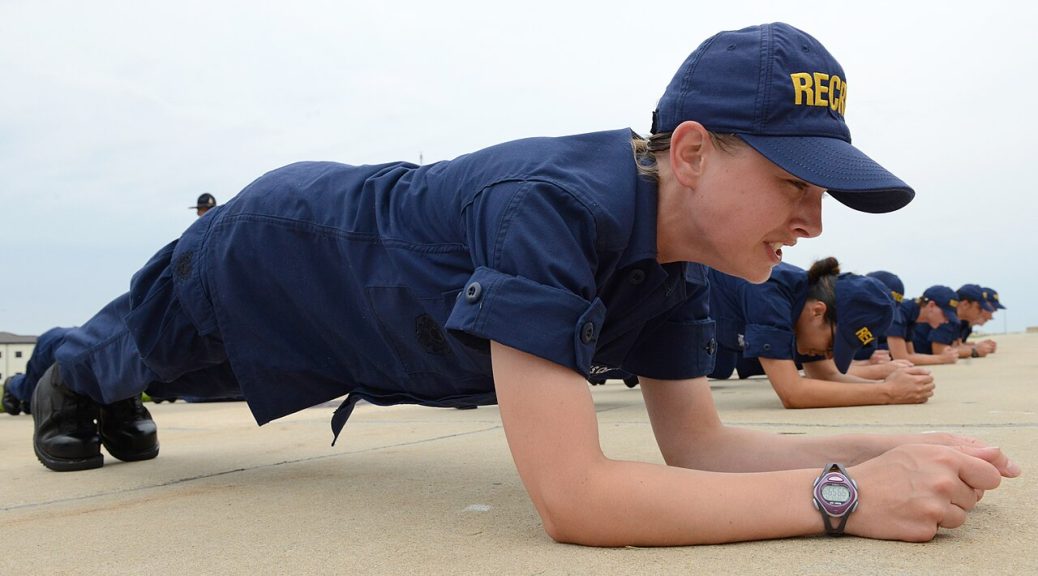
As an illustration, consider a plain plank. You set your forearms and toes on the floor, brace your abdominals, glutes and thighs, and hold your shoulders and hips square to the ground. Nothing moves, yet your whole cylinder is working: the front muscles resist sagging, the back muscles resist arching, and the obliques stop you tipping sideways. If your hips drop or your lower back starts to ache, the hold is too long or the brace has slipped, which brings us to technique.
How often, and how long until you notice
Australia’s physical activity guidelines recommend that adults do muscle-strengthening activities on at least two days each week. For a beginner starting resistance training, two to three sessions per week is a common and effective target, with each muscle group rested for at least 48 hours between sessions to maximise strength gains. Your core gets trained indirectly on other days too, whenever you walk, carry, climb or practise balance.
How quickly you notice a difference varies from person to person. Early gains usually show up as better control and steadier movement rather than a visible change, and steady, consistent training matters more than any single hard session. Varying your exercises, repetitions and loads over time helps you keep the strength you build.
Signs it is time to check your technique
Core exercises should feel like effort in the trunk, not strain. Watch for these warning signs:
- Your lower back aches or arches during planks, suggesting your front muscles have stopped doing their share.
- You hold your breath through every rep, which usually means the brace is too aggressive.
- You rush, trading control for speed. Steady, deliberate reps build strength with less risk.
- You stay tense and drawn in all day. Constant abdominal tension can restrict the diaphragm, so release the brace between efforts.
- Pain flares during or after the exercise rather than simple muscle fatigue.
If any of those show up, or you have back pain that keeps returning, a doctor, physiotherapist or qualified fitness professional can check your technique and suggest alternatives that suit your body.
A stronger core supports almost everything else you do, so it fits naturally into a broader routine. For the basics of structuring sets, reps and rest, start with our guide to strength training for beginners, and for a session you can do at home with no equipment at all, try our 20-minute bodyweight workout for beginners.
Questions we get
Do I need equipment to train my core?
No. Bodyweight moves such as planks, single-leg balances and squats all challenge your core. Resistance bands, dumbbells and stability balls can add variety later, but they are not required to begin.
Are situps bad for you?
Repeated situps involve a lot of bending of the spine, and many fitness sources suggest other options work better for stability. If you enjoy them and they feel comfortable, keep the reps moderate and mix in anti-rotation and anti-extension exercises as well.
How long does it take to notice stronger core muscles?
It varies from person to person, and early improvements in control and steadiness often show up before visible changes. Consistent training two to three times a week, with rest between sessions, is the approach the evidence supports.
Can I do core exercises after having a baby?
Gentle movement such as walking can generally begin within days of giving birth, or when you feel comfortable, but wait until your abdominal muscles have healed before doing vigorous tummy exercises such as crunches. Talk with your doctor or a women’s health physiotherapist about timing for your situation.
This article is general information, not personalised medical or fitness advice. Talk to your GP, a physiotherapist or an accredited exercise physiologist before starting a new exercise program if you have a health condition or injury, are pregnant or haven’t been active for a while. In an emergency, call 000.