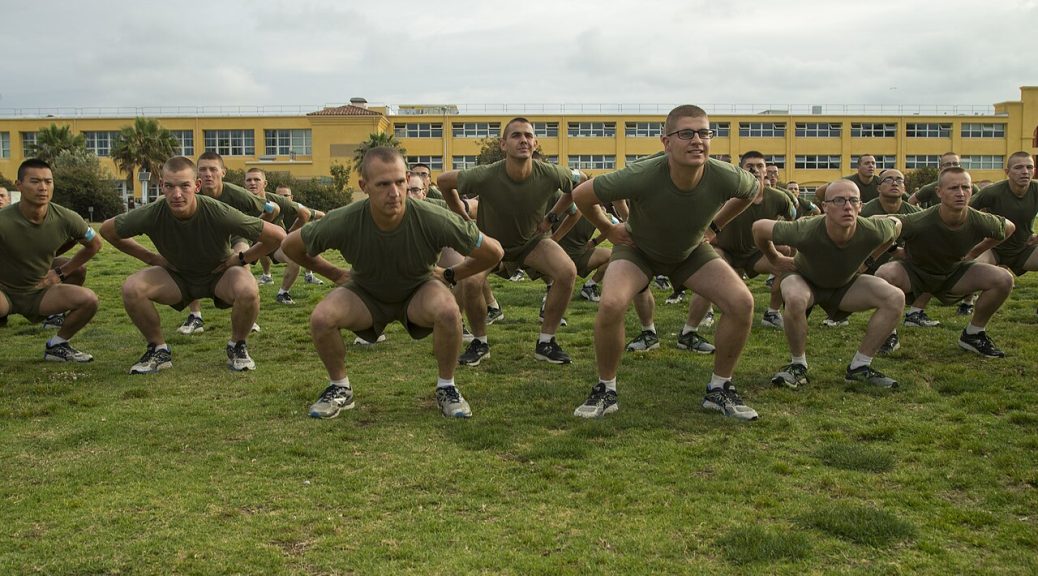
A clear walkthrough of the bodyweight squat, from setting your feet to standing back up, plus the depth question, five common faults and simple progressions.
Quick points
- Start with feet slightly wider than hip-width and toes turned slightly out, then adjust until the stance feels stable and comfortable.
- Push your hips back and down, keep your knees tracking over your second toe, and keep your heels flat on the floor.
- Lower until your thighs are near parallel, or earlier if your heels lift or your torso starts to round.
- Never squat to a depth where your hips tuck under and the natural arch of your lower back is lost.
- Master the bodyweight version before adding load, then progress through goblet, front and back squat variations.
The squat looks simple: bend your knees, sit down, stand back up. Yet small details in how you move change how it feels and what it builds. This walkthrough covers the bodyweight squat from the feet up, plus depth, common faults and what to do once the basics feel easy.
Why the squat is worth learning
Squats build strength in the large muscles of your thighs, hips and glutes, and they work your core muscles too. Because they train several muscle groups at once, they carry over into everyday life: standing up from a chair, lifting shopping bags, climbing stairs. They also support balance and stability, which matters more as you get older, since steadier legs mean a lower risk of falls. Good habits learned now also pay off later, when you add weight.
Set your feet: stance and posture
Start standing with your feet slightly wider than hip-width apart and your toes turned slightly outward. Let your arms hang by your sides. Pull your shoulders down and back, lift your chest, and look straight ahead.
There is no single correct stance. Hip anatomy varies from person to person, and the shape and depth of the hip socket affects how a squat feels, so treat the starting position above as a base and experiment with width and toe angle until you find something stable.
The movement, step by step
- Set up. Stand tall with feet in your chosen stance, shoulders down and back, chest up.
- Brace. Stiffen your stomach muscles as if bracing for a gentle poke. This stabilises your spine before you move.
- Shift your weight back. Move your weight into your heels and push your hips toward the wall behind you, as if reaching for a chair slightly too far away.
- Lower with control. Let your hips travel back and down while your knees bend. Your knees will move forward as you descend, which is normal, but keep it controlled.
- Watch your knees. Keep each knee aligned over your second toe rather than letting it collapse inward, and keep your feet flat.
- Pause at the bottom. Your weight should sit evenly between heels and the balls of your feet, and your torso and shins should lean at similar angles.
- Drive back up. Exhale, push your feet into the floor through your heels, and straighten your hips and knees. Your hips and torso should rise together. Squeeze your glutes at the top.
Breathe throughout: inhale as you lower and exhale as you push up. Holding your breath makes the movement harder to control.
Training tip
Filming yourself from the side, or squatting near a mirror, is one of the quickest ways to spot faults. Check whether your knees stay steady and controlled or wobble and cave inward.
How deep should you go?
A common target is lowering until your thighs are parallel to the floor, or as far as you comfortably can. Stop the descent if your heels begin to lift off the floor or your torso starts to round forward.
The firm rule sits at the other end: never squat lower than the point where your hips begin to tuck under and the natural arch of your lower back is lost. How deep that is depends partly on the shape and depth of your hip socket, so do not force your body to match someone else. Most people keep a neutral spine comfortably during bodyweight squats; the picture changes once heavy load is added.
Five common mistakes and how to fix them
- Knees caving inward. Cue yourself to spread the floor slightly and track each knee over your second toe.
- Weight shifting to the toes. If your heels lift, sit back further into your hips at the start and keep your weight spread between heels and the balls of your feet.
- Rounding the lower back. Usually a sign of bracing poorly or going deeper than your hips allow. Brace before you move and cut the depth back.
- Hips rising first on the way up. If your chest drops as your hips shoot up, your lower back takes extra stress. Focus on your hips and torso rising together.
- Rushing the reps. Fast, bouncy squats trade control for speed. Steady, deliberate reps build more strength and less risk.
Making it easier when you’re starting out
If a full squat feels wobbly, shorten the range first. Lower only a quarter or halfway, keep the same technique, and gradually work deeper as control improves. Sitting down to a chair and standing back up, without using your hands, teaches the same pattern.
Progressing once bodyweight feels easy
Once you can perform smooth, consistent bodyweight squats for every rep of every set, you have earned the right to add load. A widely used progression runs from bodyweight to goblet squats, then front squats, then back squats, adding weight gradually at each stage.
Adding load progressively is the principle behind all strength gains, which our article on progressive overload explains plainly. If you are unsure how to structure sets and rest around your squats, our guide to strength training basics for beginners covers it in detail.
The squat slots neatly into a full session or a short home circuit. For a ready-made session that uses it, try our 20-minute bodyweight workout for beginners, and if anything starts to twinge rather than simply ache, our guide to avoiding common beginner exercise injuries explains when to back off. If you have an existing injury or health condition, check with a doctor, physiotherapist or exercise professional about what suits your body.
Questions we get
How wide should my squat stance be?
A good starting point is feet slightly wider than hip-width with toes turned slightly out. There is no single correct stance, because hip anatomy varies from person to person, so adjust the width and toe angle until you find a position that feels stable.
How deep should a beginner squat?
Aim for thighs roughly parallel to the floor or as far as you are comfortable, and stop earlier if your heels lift or your torso rounds. Never go lower than the point where your hips tuck under and your lower back loses its natural arch.
Should my knees go past my toes?
Your knees will travel forward as you lower, and some movement over the toes is normal. The key detail is that they stay aligned over your second toe rather than caving inward, and that your heels stay flat.
When should I add weight to my squats?
Wait until you can perform bodyweight squats with consistent, controlled technique for every rep. A common progression is bodyweight squats, then goblet squats, then front squats, then back squats, adding load gradually.
This article is general information, not personalised medical or fitness advice. Talk to your GP, a physiotherapist or an accredited exercise physiologist before starting a new exercise program if you have a health condition or injury, are pregnant or haven’t been active for a while. In an emergency, call 000.