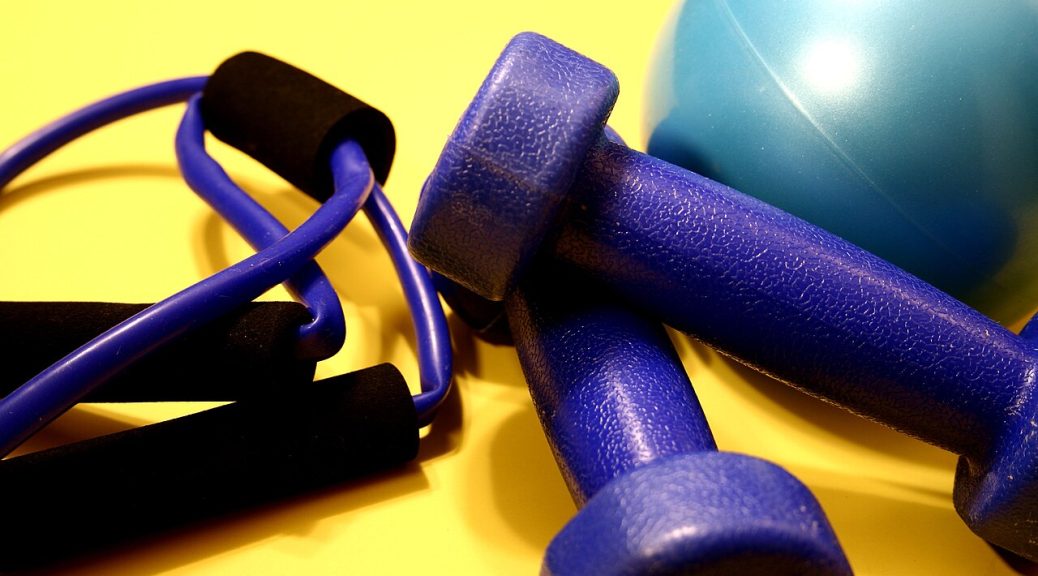
You do not need a spare room or a big budget to train well at home. We sort five stubborn myths about home gyms and what a sensible setup really involves.
Quick points
- A starter kit of dumbbells, a mat, bands and tubing, a bench and a walking plan can cover both strength and aerobic fitness.
- Even a small corner of a living room can work; adjustable equipment saves space and saves you buying more later.
- Price and quality correlate most for machines with moving parts, not for bands, mats and basic weights.
- Strength at home comes from progressive overload: about 10 repetitions with the last two challenging, then small load increases.
- Enjoyment predicts whether equipment gets used, so try before you buy and match gear to activities you like.
The fitness equipment industry is very good at convincing people that a home gym means a room full of chrome machines and a serious budget. The reality is far less dramatic. Most people who train happily at home do it with a short list of affordable gear, a bit of floor space and a plan they actually enjoy. Below, we sort five common beliefs about home gyms from what experienced fitness professionals and the research actually say.
Myth: You need expensive machines to get results
Fact: the classic recommended starter kit costs little and covers both strength and aerobic fitness. Fitness professionals answering a public hotline run by the American Council on Exercise described an effective home setup as adjustable dumbbells or a variety of weights, an exercise mat, bands and tubing, a bench, plus a program of walking or jogging for aerobic fitness. Nothing on that list resembles a commercial machine.
Muscles respond to tension, not price tags. Exercise researchers explain that challenging bodyweight exercises such as push-ups and pull-ups create the same mechanical tension that sparks muscle growth as lifting weights does. Walking, meanwhile, is free, needs no special equipment, and just 30 minutes a day can improve cardiovascular fitness, strengthen bones and build muscle endurance.
Where price does matter is bigger purchases. The same advice notes a strong correlation between price and quality in the home exercise equipment market, so for items such as a treadmill, rower or weight station, it suggests setting a budget and buying the best you can afford. Quality matters most where there are moving parts. A resistance band does not need to be premium to work.
| Item | What it covers |
|---|---|
| Adjustable dumbbells or a few pairs | Strength work for the whole body |
| Exercise mat | Floor work and stretching, in comfort |
| Bands and tubing | Resistance training that packs away in a drawer |
| Adjustable bench | More exercise options with your weights |
| A walking or jogging plan | Aerobic fitness at no cost |
Myth: A home gym needs a whole room
Fact: even a small corner of a living room can be made into a decent exercise space, according to exercise physiologists at the Cleveland Clinic. A spare bedroom, basement or garage offers more options, but square footage is a nice-to-have rather than a requirement.
The trick in small homes is choosing gear that adjusts rather than accumulates. Adjustable dumbbells let one compact set take the place of many pairs, so you can increase the load as you get stronger without buying more equipment. Apartment dwellers are advised to think through a few practical details before buying: the weight limit of your floor, the layout of the space, and how much noise the people around you will hear. And a workout video needs barely more floor than a mat takes up.
Training tip
Before you buy anything, write down the exercises at the heart of your ideal week, then buy for those movements only. Equipment chosen this way earns its floor space; equipment bought on impulse rarely does.
Myth: Cheap gear isn’t worth buying
Fact: this one is partly true and partly not, so it deserves a careful answer. For simple items such as bands, tubing, mats and basic dumbbells, there is no reason to think expensive versions train you any better. Your muscles cannot tell what the band cost.
The price-quality link shows up in machines and anything with motors, cables or moving parts, which is why the advice for those is to set a budget and buy the best quality you can afford. Whichever end of the price range you shop at, equipment lasts longer when you look after it: check gear regularly for wear and tear, keep shoes in good condition, and repair or replace anything damaged before you use it. If you are starting out, you do not have to spend a lot, and you can always upgrade once you know what you enjoy.
Myth: Home workouts can’t build real strength
Fact: strength comes from progressive overload, which means steadily increasing the challenge on your muscles over time, and that principle works with any equipment you can adjust. What does not work is performing endless repetitions with a light weight. Researchers are clear that this does not promote muscle growth.
A few practical markers from the evidence:
- Choose a load you can lift about 10 times, with the last two repetitions posing a real challenge.
- Once that becomes comfortable, increase the load in small increments, roughly 5 per cent at a time.
- Keep good form throughout each set; if your form breaks down, the weight is too heavy.
Adjustable dumbbells, bands with different resistance levels, or harder bodyweight variations all give you room to progress. Our explainer on progressive overload covers the principle in more depth, and how heavy your first dumbbells should be helps with choosing a starting weight.
Myth: If you buy it, you will use it
Fact: the treadmill that became a clothes rack is a cliche for a reason. Polling by CivicScience in the United States suggests people are more likely to exercise if they can do it at home, so the convenience is real. But convenience only pays off when the equipment matches what you actually want to do.
The advice from fitness professionals is consistent on this. Try before you buy where you can, because you are far more likely to stick with exercise you enjoy. Spend time working out what you want to do in the space before shopping; someone who wants yoga needs different gear from someone who wants to lift. Researchers who study goal setting also suggest breaking a big goal into small, specific mini-goals and keeping a training diary, which does far more for consistency than any single purchase.
What actually matters when you are choosing
Strip away the marketing and four questions matter more than any specification sheet.
- What do you enjoy? Enjoyment is the key to sticking with an exercise plan, so choose activities you like rather than ones you think you should do.
- What fits your space and household? Measure the spot, consider floor loading if you plan to lift heavy, and think about noise.
- Does the equipment let you progress? Adjustable, versatile choices grow with you instead of being outgrown.
- Is it safe and well maintained? Check for wear, learn correct technique, and work through the adult pre-exercise screening tool before starting a new program. This is especially worth doing if you are over 40, overweight, have not exercised in a long time or have a chronic medical condition, and your doctor can help you with it.
One last honest point in home training’s favour: convenience and cost are the two reasons people give most often for preferring to exercise at home, and a home gym is always open, with no travel time eating into your day. Those advantages are exactly why a modest, well-chosen setup beats an ambitious one that never gets used.
If you are starting from nothing, bands are among the cheapest useful first purchases, and our beginner’s guide to resistance bands shows how to use them well. To put your new space to work straight away, try our 20-minute beginner bodyweight workout, which needs no equipment at all.
Questions we get
What equipment do I need for a basic home gym?
An adjustable dumbbell set or a few pairs of weights, an exercise mat, bands or tubing and a bench cover most strength work. Add a walking or jogging routine for your aerobic fitness.
Can I build muscle with bodyweight exercises at home?
Yes. Challenging moves such as push-ups and pull-ups create the same mechanical tension that triggers muscle growth as weights do. The key is making exercises harder over time rather than doing endless easy repetitions.
Is expensive gym equipment better quality?
For machines with motors, cables and moving parts, there is a strong link between price and quality, so buy the best you can afford once you have set a budget. For simple items like bands and mats, a basic version does the same job.
How much space does a home gym need?
Even a small corner of a living room can be enough. If space is tight, choose adjustable gear and think about floor weight limits, layout and noise before you buy.
This article is general information, not personalised medical or fitness advice. Talk to your GP, a physiotherapist or an accredited exercise physiologist before starting a new exercise program if you have a health condition or injury, are pregnant or haven’t been active for a while. In an emergency, call 000.