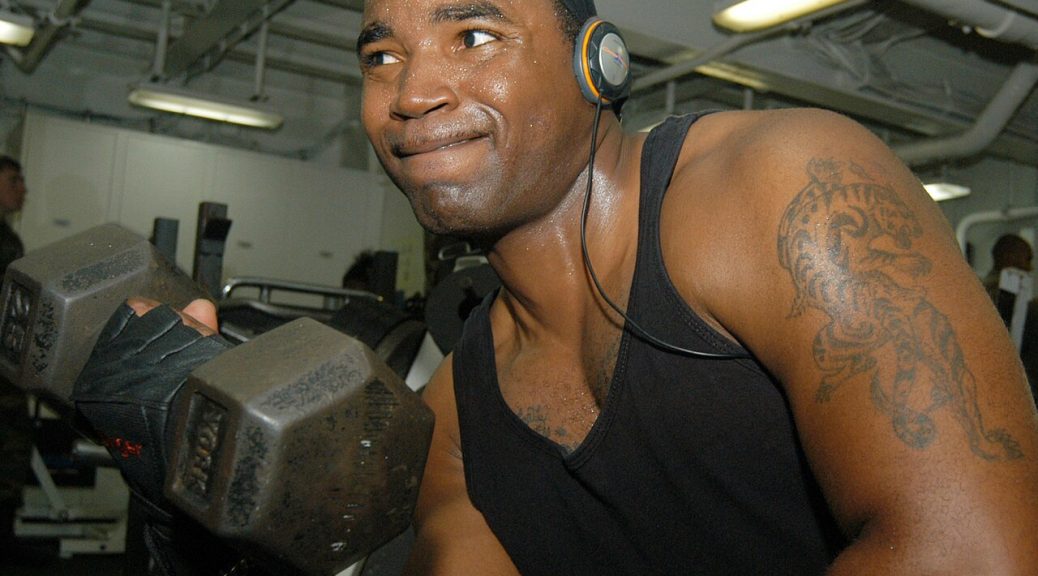
No single starting weight suits everyone. Here is how to judge a first dumbbell by form and effort, why exercises need different loads, and what to do between sizes.
Quick points
- There is no universal starting weight; the right dumbbell depends on the exercise, the muscles involved, your strength background and any past injuries.
- A weight is in the right range when you can move it through a full range of motion and the last two to three reps of a set feel hard but controlled.
- Larger muscle groups can handle more load than smaller ones like arms and shoulders, so most people need more than one weight.
- When a weight stops feeling challenging, try more reps, a slower tempo or an extra set before buying the next size up.
- Check with a doctor or exercise professional before starting if you have a health condition, are pregnant or are returning from an injury.
Buying your first pair of dumbbells is one of those decisions that feels bigger than it is. There is no magic starting number that suits everyone, because the right weight depends on the exercise, your body and your history. What matters far more is learning a few simple checks that tell you whether a weight is doing its job. This guide walks through those checks, along with how to progress once a pair starts feeling easy.
What does a starting weight actually depend on?
The honest answer is that it depends on several things at once, and no chart can settle it for you. The factors that matter most include the following.
- The exercise and the muscles involved. Larger muscle groups can handle more weight than smaller ones. Your legs will usually manage a far bigger load than your shoulders or arms, simply because those muscles are bigger and do heavy work every day.
- Your general ability. People vary a lot in natural strength, regardless of age or sex. Someone with a background in physical work or sport may start heavier than someone who has never trained, and both can be completely normal.
- Your training and injury history. Old injuries and long breaks from activity change what your body is ready for. A shoulder that complains easily needs a gentler introduction than an untrained but healthy one.
- Your grip. Grip strength can be a limiting factor with dumbbells, and a weight your grip cannot hold securely is not a safe choice, however strong the target muscles are.
It is worth taking the decision seriously, because strength training done regularly has real benefits. It builds muscle, protects bones and joints, improves bone density and lowers the risk of conditions such as heart disease and type 2 diabetes. Healthdirect suggests adults check in with a doctor or an exercise professional before starting a strength training program, which is sensible advice to take before money changes hands.
How can you tell if a weight is light enough to start with?
Use two checks every time you lift: form and fatigue. A weight with workable form is one you can lift steadily, without jerking or rushing, through the whole movement from start to finish. Fatigue means the set actually challenges you. In a well-matched set, the final two or three repetitions feel demanding yet stay within your control. When you are straining from the very first repetition, the load is too heavy. When none of the reps tax you, it is too light.
| Signs a weight is too heavy | Signs a weight is too light |
|---|---|
| You swing the weight or use momentum to move it | You keep going well beyond your planned rep count |
| You cannot complete the movement with a full range of motion | Sets end without any real sense of the muscles working |
| You are straining from the very first repetition | Weeks pass with no change in your strength |
The too-heavy column deserves special attention early on. Lifting with momentum and shortened movements can look like hard training, yet the muscles lose much of the benefit while the joints soak up extra stress. Hurrying a dumbbell through a rep does not speed up strength gains. What it mostly adds is risk.
Training tip
If you cannot keep good form, the weight is too heavy for that exercise, no matter who else is lifting more in the room. Controlled reps at a manageable load are what actually make you stronger.
Why do different exercises need different weights?
Because muscles differ in size and in the work they already do. A squat or a row calls on big muscle groups that handle substantial loads in daily life, so those exercises usually tolerate a heavier dumbbell. A lateral raise or a curl works small muscles that fatigue quickly, so the same person will often need a lighter pair there.
Your goal shapes the choice as well. As a general guide, training for muscular endurance uses lighter weights for around 10 to 14 reps per set across 2 to 3 sets, training for strength uses a moderately heavy weight for around 6 to 10 reps across 3 to 6 sets, and training focused on muscle growth uses heavier weights for around 4 to 6 reps across 2 or fewer sets. These rep ranges are only a starting framework, and any sensible plan will adjust them for the individual. Our article on the basics of sets, reps and rest for strength training newcomers explains how to put these pieces together into a session.
What should you do if two exercises need very different weights?
Plan for more than one pair, because a single weight rarely suits a whole workout. A few practical points help here.
- Buy in pairs rather than singles. Matching pairs feel the same in each hand, and if you buy a single and go back later, the same model may be gone and the grip will feel different.
- Consider the head shape. Dumbbells come with round, square or hex-shaped ends. Round ones roll across the floor when you set them down, which is a small annoyance that adds up. Hex shapes stay put.
- Look at adjustable dumbbells if space or budget is tight. They cover a range of weights in one purchase, which solves the mismatch problem neatly, though they cost more up front than a single fixed pair.
- Use resistance bands alongside your dumbbells. Bands let you fine-tune the challenge on smaller muscles without buying another set of weights, and our guide to resistance bands for beginners shows how to use them well.
When is the right time to move up a weight?
Move up when the current weight stops giving your muscles a reason to adapt. The clearest signals are repping well past your planned number, finishing sets without much feel in the working muscles, and seeing no strength change across weeks of regular training. Any one of those suggests the load has become too easy.
Progress works because the body responds to a challenge it has not met before. This idea is called progressive overload, and our article on progressive overload explains it in detail. The key word is gradual. Your muscles, and the tissue that connects them to your bones, need time to get used to heavier demands, so step up in small increments rather than big leaps. Spreading your sessions across the week, with rest days in between, gives your body time to recover and adapt before the next round of work.
What can you do between dumbbell sizes?
Plenty. The gap between two dumbbell sizes can feel large, especially at lighter weights, but you have several ways to make a pair feel harder before you buy the next one up.
- Add repetitions. If you were doing 8 reps, build towards 12 or 14 with the same weight.
- Slow the tempo. Lowering the weight slowly, or pausing at the hardest point of the movement, increases the time your muscles spend under tension, which raises the challenge without changing the load.
- Add a set. Going from 2 sets to 3 increases the total work your muscles do.
- Shorten your rest periods. Less recovery between sets means each set starts from greater fatigue.
Once those options have run their course and your form is still solid at the top of the range, that is the moment to buy the next size. You do not need every in-between size for home training either. A small jump in load is something your body can handle once it has adapted to the current one.
When should you ask a professional for help?
Ask before you start if you have a chronic condition or a disability, if you are returning from an injury, or if anything about your health gives you hesitation. A doctor can suggest a way of training that suits your situation and may refer you to an exercise professional who can write an individual program, including which weights to begin with.
Pregnancy is another case where advice matters. Strength training is generally possible during a healthy pregnancy, but the guidance is to avoid heavy weights and any activity with a risk of falling, and to skip anything that causes pain. Beyond that, use pain as a signal during any workout. A burning feeling in a working muscle is normal effort. Sharp or lasting pain is not, and it warrants stopping and getting advice from a doctor, physiotherapist or exercise professional before you continue.
Choosing a first weight is less about finding a perfect number and more about learning to read your own form and effort. Once you can do that, the dumbbells almost pick themselves. For help staying safe as a newcomer, our guide to how to avoid common beginner exercise injuries is a good next read.
Questions we get
Should beginners buy fixed or adjustable dumbbells?
Adjustable dumbbells cover a range of weights in one purchase, which suits people who need different loads for different exercises. Fixed pairs are simpler and are usually bought in pairs so the grip and feel match.
How often should beginners do strength training?
Aim to strength train regularly and give your muscles time to adapt between sessions with rest days. An exercise professional can help you plan a weekly routine that suits your situation.
Is it a problem if my dumbbells feel easy?
If every rep feels easy and you can keep going well past your planned reps, the weight is probably too light. Muscles need a genuine challenge to get stronger.
What should I do if I feel pain while lifting?
Stop the exercise and ask a doctor, physiotherapist or exercise professional about it before continuing. Some effort is normal in training, but sharp pain is a signal to stop.
This article is general information, not personalised medical or fitness advice. Talk to your GP, a physiotherapist or an accredited exercise physiologist before starting a new exercise program if you have a health condition or injury, are pregnant or haven’t been active for a while. In an emergency, call 000.