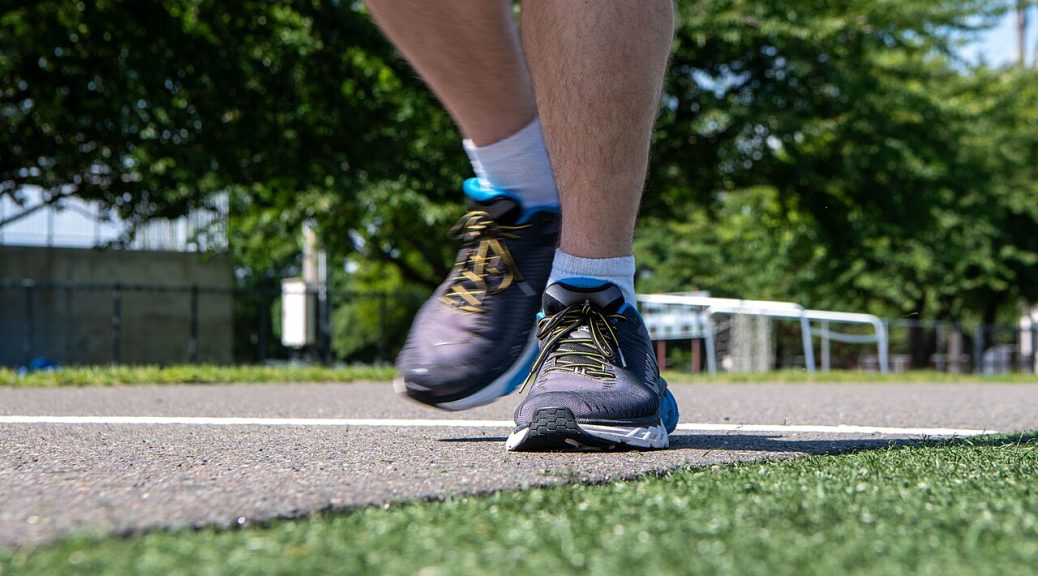
Walking and running look similar but load your feet in different ways. Here is what separates the two types of shoes, and whether one pair can honestly do both jobs.
Quick points
- Walking absorbs about 1.5 times your body weight per step, while running sends roughly three times your body weight through your feet.
- Running shoes can be used for walking, but walking shoes are generally not suitable for running because they lack the cushioning running needs.
- About one in three recreational runners gets a running-related injury at some stage, and incorrect shoes are one of the risk factors.
- Shop when your feet are at their biggest, wear your activity socks, measure both feet and expect the shoes to feel comfortable straight away.
- If foot pain makes walking or running uncomfortable, see a doctor, physiotherapist or podiatrist, because shoes cannot fix existing problems.
One pair of shoes for everything sounds convenient, and sometimes it genuinely works. Whether you need a second pair depends on what you actually do each week, because walking and running load your feet in noticeably different ways. Understanding those differences, and how shoe makers design for them, makes the decision at the store much simpler.
Do walking and running stress your feet differently?
Yes, and the gap is bigger than most people expect. Each walking step absorbs about 1.5 times your body weight, while each running step sends roughly three times your body weight through your feet. There is a structural difference too: walkers always have one foot on the ground, while runners have a moment in every stride where both feet are off the ground, so each landing carries more force.
That extra force helps explain the injury numbers. About one in every three recreational runners will have a running-related injury at some stage, and roughly three out of four running-related injuries happen in the lower leg, with common sites including the knee, ankle, shin and foot. Incorrect shoes are one of the factors that can raise this risk, contributing to problems such as blisters and shin pain. None of this means running is unsafe. It simply means the cushioning that feels generous on a walk gets tested much harder at a jog.
How does your foot hit the ground in each activity?
Differently, and this is what shapes shoe design. When you walk, your heel lands first, then your foot tips forward and rolls through towards the toes as you move into the next stride. Runners touch down in different places: some on the heel, others around the middle of the foot or on the ball of the foot, and they push off with far more force to move their body forward.
Walking shoes are therefore shaped around a heel-first roll, while running shoes are built to cope with a range of landing positions and a strong push-off. If you are new to running and wondering what terms like midfoot strike actually mean, our glossary of running terms covers the language you will see on boxes and in reviews.
What are running shoes designed to do?
Handle repeated, high-force landings. Running shoes have chunkier soles built to soak up impact, and they weigh less than walking shoes, a design choice that helps delay tired legs over long distances. The midsole, the foam layer between the upper and the outsole, does most of the cushioning work.
Here is a detail that surprises many people. A shoe does not cut the force passing through your body by a large amount. What it does is spread that force over a longer stretch of time, which gives your body a chance to adjust. Thicker, more responsive midsoles are the running shoe’s answer to the two to three times body weight generated with each stride. Many running shoes also include features that help keep your foot in a steady, supported position as it makes contact with the ground.
What are walking shoes designed to do?
Support a slower, rolling movement. Because walkers strike the ground heel first and roll through each step, walking shoes have soft, flexible soles that make pushing off easier. They also have an angled heel, which absorbs much of the shock at heel strike and reduces pressure on the ankles.
Walking shoes tend to prioritise stability and durability too, since walking often means long periods on your feet at a steady pace. A firmer platform suits that job well. What it does not suit is running, which brings us to the main question.
Can one pair of shoes do both jobs?
Yes, if the pair is a running shoe, and no if it is a walking shoe. Running shoes can be used for walking, because their extra cushioning and shock absorption comfortably cover the lower impact of each walking step. Walking shoes, on the other hand, are generally not suitable for running, because they lack the features a runner needs to manage the impact of each stride.
Training tip
If you want a single pair to cover walks and the occasional jog, choose a running shoe rather than a walking shoe. It is built for the higher-impact job.
When is one pair probably fine?
For plenty of people, one well-chosen pair of running shoes covers the lot. You are likely in this group if:
- You walk for fitness most days and only jog occasionally.
- Your jogs are short and comfortable, with no aches afterwards.
- You are following a beginner plan that starts with brisk walking and gradually adds jogging.
A walking shoe makes more sense if most of your activity is standing or slow-paced walking for long stretches, such as a job that keeps you on your feet all day, where its firmer platform can feel more stable. Walking is low impact and needs minimal equipment, so there is no need to over-complicate the purchase. Beginners to exercise are generally advised to start with brisk walking, progress to jogging and then work up to running over a few months, so a shoe that handles walking and light jogging covers that whole progression.
What signs suggest it is time for separate pairs?
Listen to your feet and legs after runs. Signals worth acting on include:
- Blisters, which are often caused by the foot sliding or rubbing inside the shoe, or shin pain that appears after jogging but not after walking.
- New aches in your knees or feet after runs you previously handled comfortably.
- Cushioning that feels flat, or soles worn smooth or unevenly.
- Your running distance or frequency increasing, so the shoe is now doing a job it was never designed for.
Footwear can contribute to changes in how you move, and some shoes may cause pain that suggests they are placing extra stress on your knees. If discomfort keeps appearing once you start running regularly, that is a reasonable moment to add a dedicated running pair rather than pushing through.
What should you look for on the shelf for each activity?
Match the design features to the movement. This table sums up the main differences:
| Feature | Running shoes | Walking shoes |
|---|---|---|
| Cushioning | Thicker midsole to absorb higher impact | Moderate cushioning with a firmer platform |
| Sole shape | Curved, to support forward motion | Flatter, flexible in the forefoot for the heel-to-toe roll |
| Heel | Wider for stability at speed | Angled to absorb shock at heel strike |
| Best match | Jogging, running and brisk walking | Long hours standing and slow, steady walking |
Whichever category you shop in, the fit checks are the same. Our guide to picking running shoes that fit walks through the details, but the essentials apply to any athletic shoe.
How do you make sure a pair actually fits?
Try before you buy, ideally at a specialty store, where the team can size your feet properly and point you towards shoes suited to what you plan to do. A few habits make the fitting more reliable:
- Shop later in the day or once you have finished a workout, because that is when your feet are at their largest.
- Wear the same type of sock you will use for the activity.
- Have both feet measured every time you buy, since feet can grow longer and wider over the years, and it is common for one foot to be slightly larger than the other.
- Check you can wiggle all your toes, and leave a little space between your longest toe and the end of the shoe.
- Make sure the shoe grips your heel, so it does not slip when you move.
- Expect comfort straight away. A shoe should feel good as soon as you try it on, without relying on a breaking-in period.
Also feel inside for seams or tags that might irritate your foot, and check the soles are sturdy enough to protect you, with grip on the surfaces you use. Walk or run a few steps in the store, on both carpet and a harder surface if you can, and think about width as well as length. A half-size larger shoe that pinches across the ball of your foot will not solve anything.
When should you ask a professional about your feet?
If foot pain or a physical problem makes walking or running uncomfortable, see a doctor, physiotherapist or podiatrist rather than hoping a different shoe will sort it out. The right shoes help protect against pain and injury, but they cannot fix an existing problem.
People with flat feet are a good example. Supportive shoes, physiotherapy and orthotics can help reduce symptoms, and a podiatrist can help you choose inserts suited to your shoes. When shopping, measuring your foot’s length and width, matching the shoe to your foot’s natural shape, leaving space at the toes and choosing a low or no heel all help keep feet comfortable.
It is also sensible to see your doctor for a check-up before starting a running program, especially if you are over 40, are overweight, have a chronic illness or have not exercised in a long time. The same advice applies if you have a medical condition and are about to start walking for exercise.
Shoes are one piece of the puzzle, and how you build up your distances matters more than the label on the box. Our gentle eight-week walking to jogging plan increases effort gradually, and a proper warm-up before exercise prepares the muscles and joints your shoes support.
Questions we get
Can I jog in my walking shoes?
It is not recommended. Walking shoes lack the thicker, shock-absorbing soles that running shoes use to handle the higher impact of each running stride.
Are running shoes good for walking?
Yes. Their extra cushioning comfortably covers the lower impact of walking, which makes a running shoe a sensible single pair for both activities.
How do I know when my shoes need replacing?
There is no set date. Watch for cushioning that feels flat, soles worn smooth or unevenly, and new aches after activity you previously handled comfortably.
What if I have flat feet?
Supportive shoes, physiotherapy and orthotics can help reduce symptoms. A podiatrist can help you choose inserts suited to your feet, and your doctor can advise on your own situation.
This article is general information, not personalised medical or fitness advice. Talk to your GP, a physiotherapist or an accredited exercise physiologist before starting a new exercise program if you have a health condition or injury, are pregnant or haven’t been active for a while. In an emergency, call 000.